
From Assembled Teams to Living Pedagogies
The genesis for our book grew out of years of working alongside leaders and teaching teams in international schools, where we began to notice a consistent pattern: the way a team comes together matters - deeply. Beyond structures and systems, it is the early experiences of collaboration through thinking, questioning, and building understanding together that shape not only the strength of relationships within a team, but also the level of depth, intentionality, and purpose they are able to sustain. Over time, we saw how this, in turn, influences what becomes possible for children. When teams are truly brought together, their collective capacity expands, opening up richer, more responsive learning experiences that could not emerge from individuals working in isolation.
“Putting a team together can be easy; however, bringing a team together can be hard work. Without the chance to think critically, contribute meaningfully, and co-create pedagogical values and practices, teachers risk becoming passive implementers rather than active co-constructors of the learning journey.”
— Finding Our Way: Developing a Shared Pedagogy p.7
These words serve as both an invitation and a provocation. In many schools, teams are formed efficiently: roles are assigned, schedules aligned, and responsibilities distributed. What appears straightforward on the surface, however, holds the potential to transform our practice - if we begin to think differently about how we bring teams together. Something more elusive is required. Something slower, more relational, and more intentional.
Shared pedagogical beliefs and practices grow through dialogue, through tension, through the willingness to stay in conversation long enough for something deeper to take shape. At its heart, this is a collective act of making meaning. Constructing understandings together is not something that simply happens; it is a conscious choice. It calls on both leaders and team members to intentionally consider how they come together, how they strengthen alignment, and how they recognise and amplify the unique strengths each individual brings.
To choose to develop a shared pedagogy is to choose to invest in the work of coming together. Not to erase difference, but to engage with it as an activating force for new learning. Not to rush toward agreement, but to linger in inquiry. This work requires something else of us: it asks leaders to create the conditions where thinking is visible, where uncertainty is welcomed, where educators can feel healthily challenged and gently held. It asks teams to lean into one another, to listen carefully, to speak honestly, to remain open to being changed by what they hear. It is in this space that pedagogy becomes alive.
If we are to move beyond surface alignment of curriculum, context and pedagogy, we must invest, deeply and intentionally, in the relational and intellectual work of building shared understandings. This means creating time and space for genuine dialogue; where assumptions can be surfaced, perspectives explored, and meaning negotiated together. It asks us to prioritise trust as much as efficiency, to see disagreement as a pathway to clarity, and to recognise that shared understanding is not something we declare, but something we construct over time. Such work cannot be rushed or reduced to protocols alone; it requires curiosity, openness, and a willingness to sit in the messy and often uncharted complexity of thinking together. It is within this ongoing process that teams begin to develop coherence, not just in what they do, but in how and why they do it.
In different teams this work takes on its own unique shape and rhythm. For example, a leader and their team might:
Invest time in getting to know each other’s stories
Exploring the many personal and professional journeys that shape how we see the world and the child.Explore how the identity of the child is constructed as a collaborative undertaking
Making time to unpack how each member gives meaning to childhood, influenced by culture, experiences and belief.
Interrogate their viewpoints in robust respectful conversation
Asking themselves: What practices truly reflect our view of children? How do our words, actions and behaviours uphold children’s competence and capabilities? How can we choose to honour children’s rights, especially when children are underestimated by others?Develop a shared language
By thinking together about how young children learn, in dynamic relationship with one another, and by finding words that hold this complexity with care and clarity.
This is not quick work. Far from a checklist or compliance exercise, it cannot be reduced to a meeting or one document. It unfolds over time, through cycles of observation, documentation, interpretation, and reflection. And yet, it is precisely this investment that transforms a group of individuals into a community of practice.
It is within this ongoing process that teams begin to find their way - not by following a predetermined path, but by paying close attention to what emerges through their shared thinking and experience. As understandings deepen, patterns start to surface, connections are made, and a sense of direction begins to take shape. What guides the team forward is not certainty, but a collective commitment to inquiry, reflection, and meaning-making.
“Like astronomers who chart paths through the stars, observing patterns, constellations, and celestial movements to make sense of the vast universe, teachers exploring their own sense of pedagogy can find their way by examining their unique and intersubjective experiences, insights, and observations. When educators are encouraged to question, refine, and reimagine their approaches, they cultivate a collective culture that is dynamic, full of vitality, and enduring.”
— Finding Our Way: Developing a Shared Pedagogy, p.383
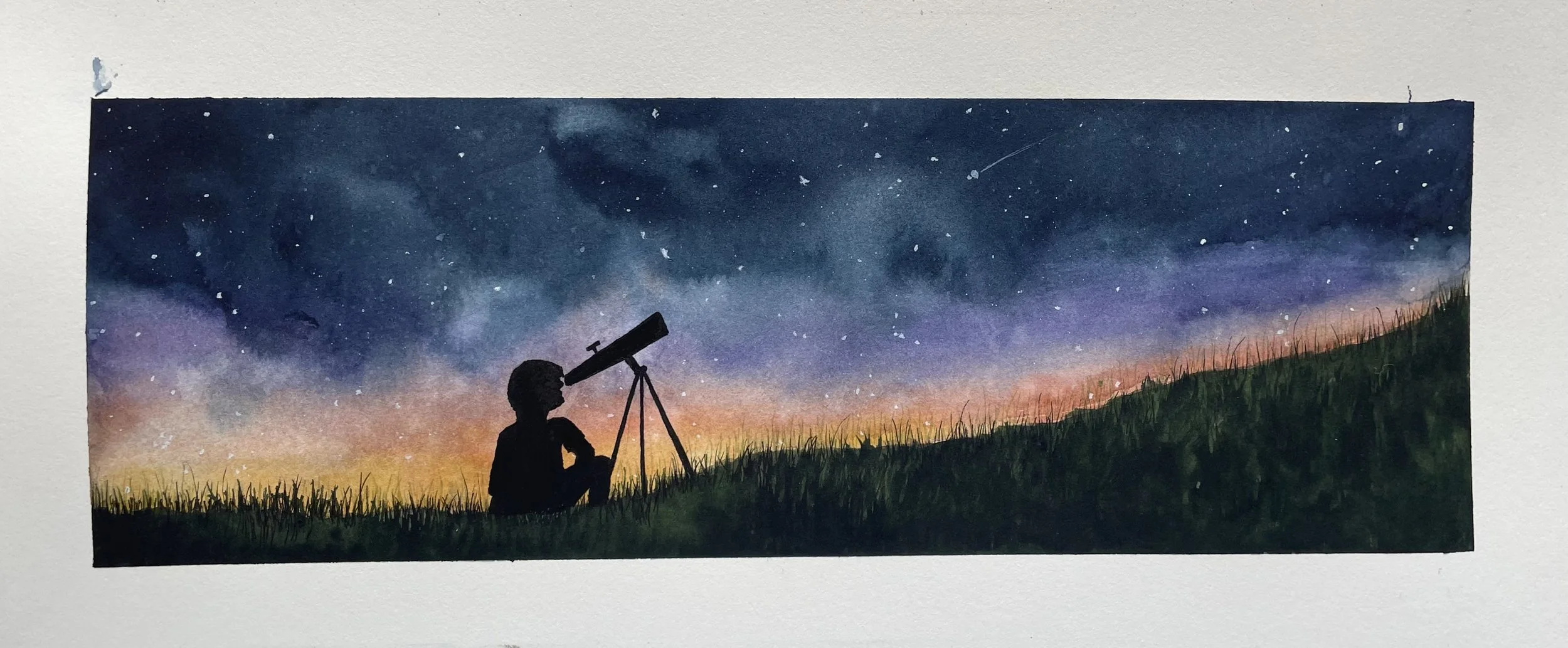
Watercolor by Caitlyn Bakes from Whimsy Studio https://whimsy-studio.square.site
There is something profoundly hopeful in this image. We are not asked to follow a fixed map. Instead, we are invited to notice patterns, to trace connections, to make meaning together. Each educator brings their own experiences, moments of insight, questions, tensions, and possibilities. It is through the collective deconstructing and reconstructing that a shared pedagogy begins to emerge. This kind of culture is not static. It breathes. It evolves. It holds space for uncertainty and invites continuous reimagining.
And perhaps most importantly, it positions educators not as implementers of predetermined practices, but as researchers of their own contexts, attuned, responsive, and deeply engaged in the enlightening work of learning.
As you reflect on your own context, we invite you to sit with these questions:
How do you intentionally bring your team together - beyond structures and roles?
In what ways do you cultivate and recognise meaningful alignment with your colleagues?
How do you create space to surface, explore, and reconcile differing perspectives on children, childhood, and education within your team?
Fiona and Anne