
What if the most meaningful curriculum was already unfolding before we ever opened a planner? Beneath the block constructions, role-plays, mini-worlds, and the many narratives of children’s play lives a rich landscape of theories, hypotheses, and deep intellectual work - if we are willing to slow down and notice it.
In many schools, the curriculum for children begins with plans created by adults long before children enter the space. Topics are selected, activities are mapped out, and learning journeys and resources are carefully organised in advance - all with the very best intentions for children. In fact, educators often describe this approach as ‘deeply intentional’, grounded in care, expertise, and thoughtful planning. But what if intentionality was not something we do for children, but something we create with them? It makes us wonder:
What might become possible if we viewed children’s play as a vibrant scenery
of theories, concepts, and emerging understandings?
What ideas, stories, and working theories are already living within children’s explorations,
waiting to be noticed, interpreted, and extended?
Are we listening deeply enough to recognise the questions, curiosities,
and meaning-making children express through their play?
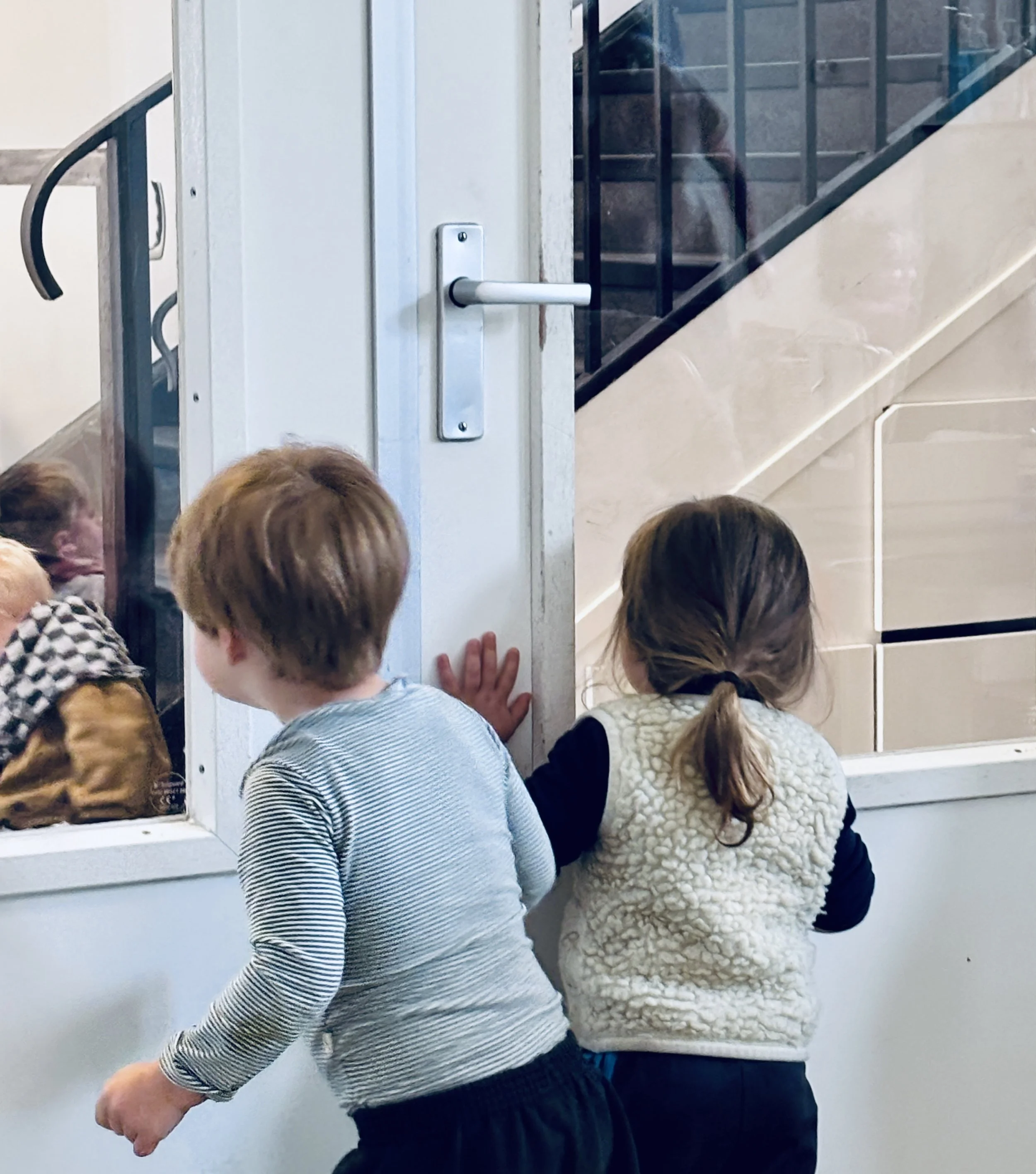
Over time, we have come to understand co-constructing curriculum with children as a deeply relational and inquiry-driven process. This way of working invites educators to slow down, listen closely, and remain open to where children’s thinking and explorations might lead.
In this two-part blog series, we explore pedagogical documentation as a practice that supports educators to co-construct curriculum with children, rather than simply planning for them.
Here in Part 1, we consider how educators can notice and interpret the significant ideas and concepts that emerge through children’s play and inquiry. Later, in Part 2, we’ll explore how these observations can inform responsive and meaningful decision-making as teachers and children work together to co-design the way forward.
Opportunities to co-construct curriculum with children begin in the everyday moments of play, conversation, experimentation, movement and wonder that unfold within active, vibrant learning communities. It starts with educators slowing down to listen. Listening, in this sense, is far more than hearing children’s words; it is both a pedagogical stance and a doorway to new understandings. Through deep and unhurried listening, educators begin to notice the ideas, theories, questions, emotions and relationships that are woven throughout children’s interactions and explorations.
In many ways, this act of listening has the potential to transform the entire curriculum-making process, shifting educators' roles from delivering predetermined experiences to engaging in genuine inquiry alongside and with their children. Listening in this way is the first great threshold of change for teachers who strive to build responsive and relational pedagogy. Listening is an indispensable tool in the teacher’s repertoire, but listening on its own is not enough. When we listen, we must do something with what we hear.
This is where documentation becomes essential. Documentation not as a method for recording activities, tracking outcomes or collecting evidence of learning experiences, but as an act of relational pedagogy. It's a practice that is rooted in curiosity, intentionality, and a view of children as capable and thoughtful interpreters and constructors of their own worlds.
When teachers listen and document they keep traces of meaningful moments in children’s play and investigations. Through photographs, transcripts of conversations, anecdotal notes, sketches, or video, the teaching team works together to create traces that can be revisited and analysed with colleagues, children, and families. Through this collaborative process, teams are then able to discuss these ideas as they pay attention to the powerful concepts that lie beneath children’s unfolding explorations.
Like researchers, teachers who engage in pedagogical documentation think critically and reflectively - not just collecting traces of the children’s learning, but asking questions, analysing, and seeking deeper understanding about how children wonder, explore, and investigate together.
-Finding Our Way: Developing a Shared Pedagogy, p.220
Concepts are broad, abstract, and transferable ideas that help children and educators make sense of experiences across contexts and over time. Far deeper than themes, and unlike isolated facts or skills; concepts are powerful and dynamic forces that drive thinking, inquiry, and meaning-making. They allow children to transfer ideas and revisit thinking in different contexts and situations, building deeper and more connected understandings of the world around them as they go.
This week Anne has been back to Perron 07, a school in the Netherlands that works closely with the ideas of Reggio Emilia. During this visit the children had been exploring the, unexpected, arrival of spring flowers in the garden. The teachers had met this curiosity and thirst for inquiry with an opportunity to study how the flowers grow and change. Sometimes it is these simple but intentional responses to the concepts that lie underneath children's ideas that can help take the investigations to a whole new level.
When teams begin to notice the concepts that lie within children’s explorations, the curriculum shifts. Rather than delivering predetermined topics or planning isolated activities, educators leverage new pedagogical strategies as they respond to the evolving ideas and inquiries that emerge from the learning group.
“Thinking together is the priority.
There are requirements to meet,
but as a team committed to children’s vitality, agency and right to ownership of their pursuits,
the focus is on [meeting those] requirements efficiently so the team can do
the essential work of thinking together about children’s thinking.”
-Finding Our Way: Developing a Shared Pedagogy, p.197
This process requires collaboration. When a team analyses documentation together, multiple perspectives enrich interpretation, questions emerge:
What ideas are children exploring here?
What concepts are they grappling with through this experience?
What theories might the children be testing?
What tensions, curiosities, or relationships are becoming visible?
As the co-constructed path of curriculum unfolds - through attentive listening, interpretation, and responsive decision-making - teachers respond with curiosity and intentionality. It is a living process grounded in relationships, sense-making, experience and wonder.
We invite you to consider:
How does your planning process make space for children’s ideas?
How do you unearth the concepts that are often present in children’s learning?
What shifts might be needed in your planning practices to make children’s thinking more visible and your approach more responsive?
Fiona and Anne