
In teachers’ work alongside children there are everyday moments that are filled with extraordinary opportunities for making meaning. Yet, through their ordinariness, these moments can easily pass by. It’s a paradox that we keep returning to again and again.
A child pauses mid-conversation to ask a question that seems far bigger than their years. Two children return, day after day, to the same game, changing only one small detail each time. A collection of sticks becomes a bridge, then a home for beetles, then a boundary that someone must cross. These moments can appear seemingly insignificant, even fleeting. Yet when we slow down, suspend our assumptions and make the choice to lean in and listen, they reveal something extraordinary.
If we spend enough time listening to young children in play and inquiry, a fascinating pattern begins to emerge. Underneath the play, the conversations, the drawings, the disagreements, the questions, the discussions and the discoveries, there are often deeper ideas at work. Children are not simply exploring insects, building cubbies, discussing superheroes, or negotiating whose turn it is next. They are grappling with bigger questions about identity, power, fairness, belonging, change, relationships, responsibility and more.
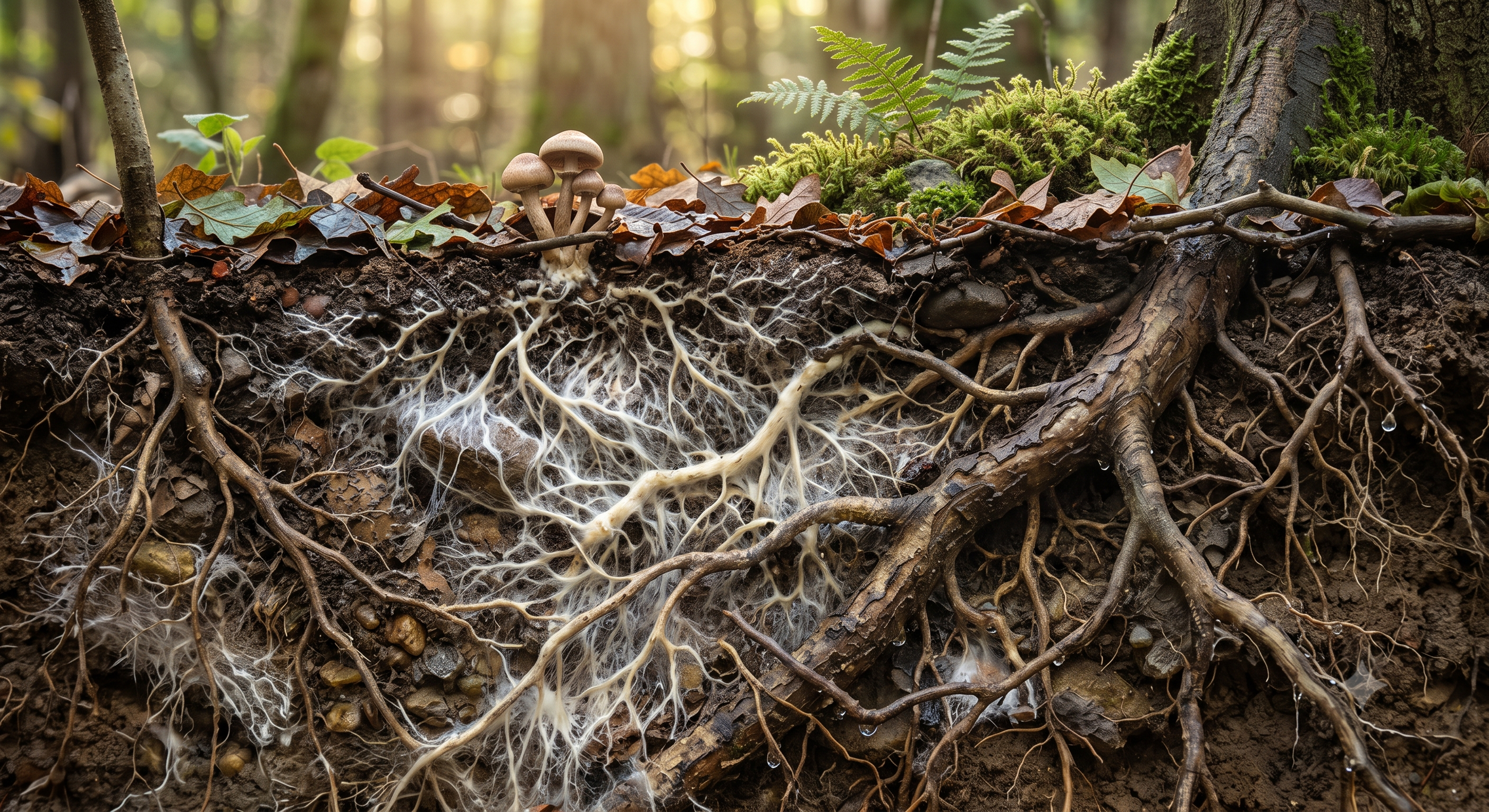
Like mycelium networks under the forest floor, these ideas are rarely visible at first glance. They are hidden beneath children's everyday experiences, connecting moments that may appear separate on the surface. One conversation nourishes another. One encounter strengthens a future insight. One investigation branches into countless others. In these subterranean, rhizomatic pathways, concepts become the living structures through which children weave meaning across time, place, and experience.
At their core, concepts are the big ideas that help us make sense of the world. They are part of our everyday experiences, always present yet not always seen. Concepts are broad, transferable understandings rooted in the human experience; ideas that stretch across contexts, cultures, and generations. Unlike facts or isolated skills, concepts are not something to be mastered and then left behind. They are lifelong companions in our search for meaning. They travel with us throughout our lives, continually connecting new experiences with what has come before.
Concepts form an interconnected network that support the transfer of understanding from one experience to another. They do not exist in isolation. Rather, they create learning pathways through which children encounter lived experiences, revisit, refine, and deepen their thinking. Each new experience becomes another point of connection within an ever-expanding web of understanding.
The concept of change, for example, can be found in the skies above, in a growing garden, in the rules of a game, in changing friendships, in a block of clay drying out over time, in shifting emotions, or in the transformation of landscapes over time. The concept of systems can be explored through ecosystems, physiology, transportation networks, family structures, communication technologies, or political institutions. Like branching fungal networks connecting distant trees, these concepts allow ideas encountered in one realm of experience to nourish thinking in another. Over time, children begin to recognise patterns rather than isolated events, constructing increasingly sophisticated understandings of the world as they go.
The most fascinating thing for us is… once educators begin looking for concepts in children's learning, they become difficult to ignore. Suddenly they appear everywhere.
A disagreement between children might reveal ideas about fairness, power and justice. A fascination with insects may uncover questions about characteristics, interdependence or survival. A conversation about family traditions may open an inquiry into identity, love, culture or belonging. Concepts live beneath the surface of children's experiences, subtly connecting seemingly separate moments into larger patterns of meaning. And often, what appears to be a completely new interest or idea is simply a new branch of learning that stems from an idea that has been developing for weeks or even months. It makes us wonder:
What concepts are currently living within children's play, conversations, relationships, and inquiries in your setting?
What might these concepts reveal about the invisible networks through which children are making sense of their worlds?
This way of thinking about concepts challenges traditional approaches to curriculum design. Too often, curriculum is organised around themes that are pre-planned or selected by adults. Themes such as The Ocean, Transport, or Community Helpers are designed to organise learning around predetermined content, directing attention towards what adults have decided children should know and do, rather than the ideas children are actively curious about.
But, concepts can offer something different.
Rather than asking ourselves, What do we want children to know about oceans? we might instead ask, What big ideas might water help children explore? How might they learn about connection, sustainability, change, or interdependence through an exploration of water?What other concepts could this encounter or experience offer children?
In this way of working, we move beyond teaching a topic and begin investigating an idea.
This subtle shift changes everything.
When concepts become central to our thinking, they breathe new possibilities into the way we see the curriculum. Learning becomes less about coverage of information or knowledge to be taught and more about the active and ongoing co-construction of meaning. Rather than moving linearly from one theme to the next, learning unfolds more like a living network. Ideas branch, intersect, loop back, and reappear in unexpected places. Teachers listen more attentively to children's theories, questions, and interpretations. Planning becomes reflexive and responsive rather than prescriptive. Inquiry becomes a shared journey alive with possibility and curiosity rather than a predetermined destination paved by certainty.
These ideas offer important questions we can keep as our curriculum crafting companions: To what extent is your curriculum organised around topics and activities? What new possibilities might emerge if concepts became the primary lens for planning, observation, and reflection?
For educators, concepts offer a powerful lens for understanding learning itself.
They help us see how children construct meaning through relationships and culture. They reveal how children connect ideas across different experiences. They encourage us to ask deeper questions and engage in richer dialogue. Most importantly, they help us move beyond documenting what children are doing to understanding how they are driven by a persistent urge to explore and make sense of their world.
Consider a group of children deeply engaged in collaborative construction. On the surface, we might observe block building, problem-solving, and communication. Through a conceptual lens, however, we might notice something more profound. Perhaps the children are exploring connection - between ideas, between people, between materials, and between possibilities. Each interaction strengthens another strand of understanding. Each new understanding offers an opportunity to see the idea through a new point of view. Concepts here act like a living network, linking present experiences with previous encounters and opening pathways into future investigations. Perhaps most importantly, concepts become powerful levers for new learning, both in children and in ourselves.
We think this is why concepts matter so deeply in early childhood and primary education.
This stance honours the reality that young children are not merely acquiring knowledge; they are building meaning. They are generating theories about themselves, about others, and about the environments, ideas and experiences they encounter. They are wrestling with the same enduring questions that humans have always grappled with: Who am I? How do I belong? What is fair? What changes? What stays the same? How are we connected?
Concepts liberate the learning process and give shape to these explorations. They invite us to see learning not as the accumulation of facts but as the ongoing development of ideas that spread, intertwine, and deepen through relationships with people, places, materials, and culture.
"Concepts provide a powerful lens for understanding the “how” of children’s meaning-making processes, shaped by culture and relationships. By focusing on concepts teachers can better see how children negotiate, construct and express understanding within social contexts, thus gaining a deeper appreciation of the ways in which children learn though relationships, dialogue and the world around them.”
-Finding Our Way: Developing a Shared Pedagogy, p.224
When we place concepts at the heart of our work, we do more than design curriculum differently. We begin to see children differently. We recognise them as capable thinkers, philosophers, and meaning-makers, agentic citizens, engaged in the profound work of understanding what it means to be human.
Perhaps our role as educators is not simply to plan the next experience, but to notice the conceptual networks already growing beneath the surface - to tend them, nourish them, and trust that, like mycelium, the richest connections are often the ones we cannot immediately see.
How might paying closer attention to concepts help you see the invisible networks of children's thinking, meaning-making, and theory-building in ways that challenge or extend your current understanding of learning?