
Pedagogical Documentation: Impossible Goalposts and Imaginary Enemies
Around the world early childhood and primary school educators are exploring the practices of pedagogical documentation as a strategy for celebrating the processes of children’s learning and coming to understand children and learning differently. An honorable intention and worthy pursuit, this approach to documentation offers educators opportunities to re-think their practices and make visible the cross-pollinations between children and educators, curriculum and the environment.
Rather than reducing our observations to a description of skills and knowledge matched only to a developmental paradigm, pedagogical documentationoffers multiple ways of coming to know and understand the complexity of children’s learning processes and experiences. Distinctly different to other forms of record keeping and observation, pedagogical documentation supports the researching teacher through a collaborative process of analysis, interpretation and reflection. It is a process that Ben Mardell, from Harvard University’s Project Zero, aptly refers to as a ‘team sport’.
“Teacher research is a team sport; an endeavor most successful when teachers are in dialogue to formulate questions, analyze data, and come to new understandings about children, childhood, teaching, and learning.”
(Mardell in Johanson & Kuh, 2013)
Sharing the interpretation of documentation is something that many teams recognise as important, some teams plan for it on a semi-regular basis but only a few prioritise it as the backbone of their practice.
So if we believe in it – why aren’t we doing it well?
The answer I hear from educators in different countries and contexts is almost universal..."But we are so stretched for time" the chorus often responds. Sound familiar? In workshops we often hear statements like these, “I love the idea of documentation", "I want to make documentation more central to my practice, but how can do this when I don't have time?” In many schools and early childhood centres, the pressure of the ticking clock appears to be common and pervasive concern.
How do we find the time to document in this way?
How much is enough documentation?
Do I have to document everything?
How do we document in a way that doesn't absorb our weekends and evenings?
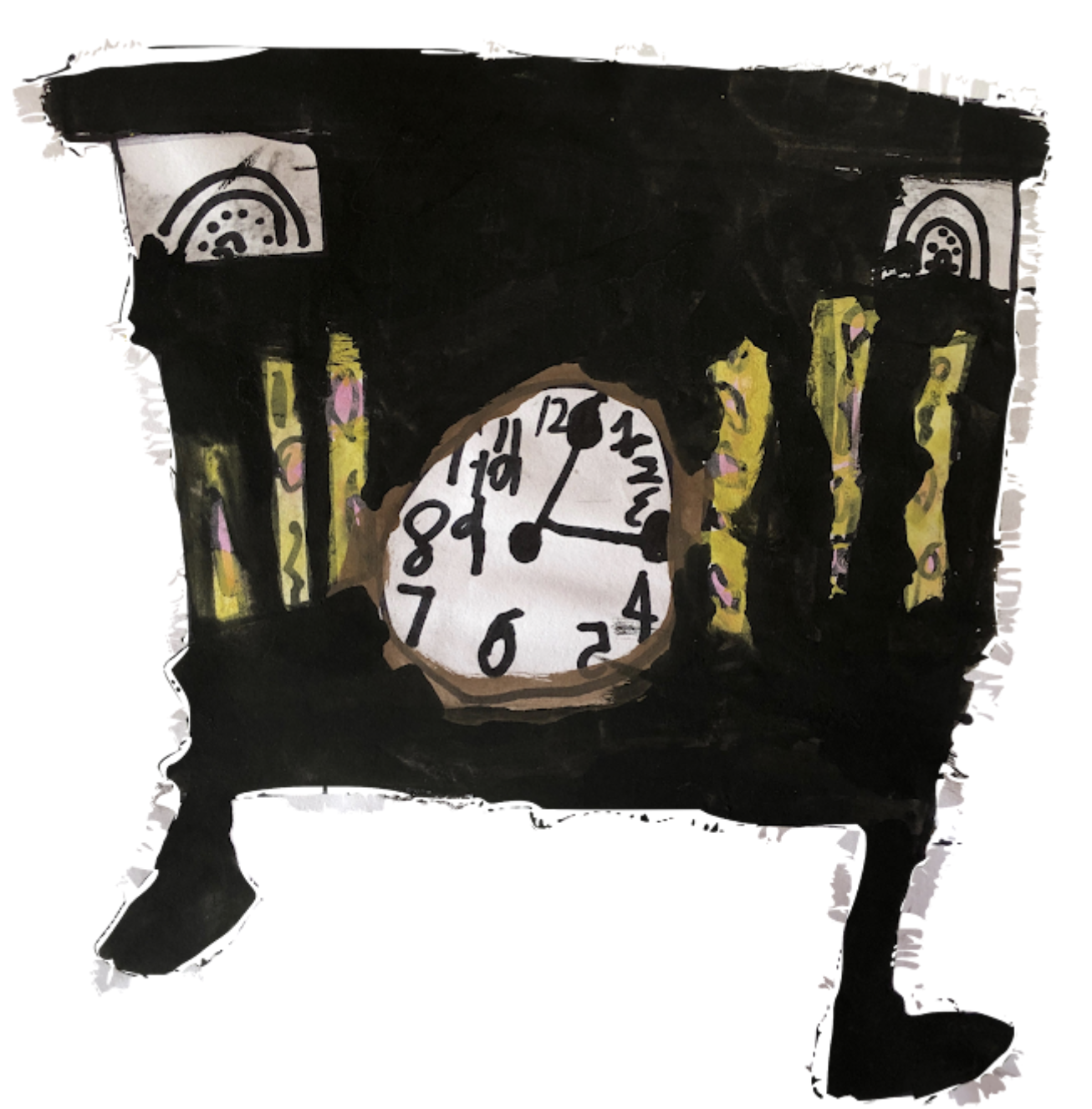
Amongst the gifts that documentation brings to our practice is the opportunity to re-conceptualize the way we see and use time. For many, time is seen as the enemy, the very thing that prevents educators from engaging deeply with the processes of pedagogical documentation, yet I think that documentation is the strategy that will allow us to transform the way we spend our time with children, colleagues and families. In reality, I think that time is not the enemy of documentation, instead I see the real enemy of pedagogical documentation lies in our ‘habits of practice’.
The habit of ‘coverage’ significantly impacts this debate. Teachers often feel the pressure to document everyone in the learning community and through every learning engagement. Adding considerable pressure to our roles and diluting the intention and depth of our documentation practices, the desire to document everything sets an unreachable goalpost. Instead of unpacking children’s meaningful moments and important turning points in discovery, challenge and constructing understanding, we find ourselves overburdened with the impossible agenda of ‘not missing learning’.
The 'coverage mindset' is counter-intuitive to our work and given rise to a set of different pressures and intentions. A contemporary phenomenon, based on a serious misinterpretation of the purpose and function of pedagogical documentation, this new and real anxiety for teachers is something that a clever colleague, Nicole Tripp, has brilliantly described as F.O.M.L. (Fear of Missing Learning). This is one such 'habit of practice' that deserves both our attention and intention.
Perhaps now, we might make the time to listen differently than before...
Fiona and Anne