
Documentation - A Strategy For Generating Knowledge
There is something quite interesting to us about the way early childhood teachers understand the term ‘documentation’. For some it can describe an invitation to notice, wonder and make learning visible, yet for others, it can just as easily evoke ideas of time pressured systems with folders, templates, deadlines, checklists and that ever-present feeling of ‘just one more thing’ to fit into an already full day.
In our work with educators, in many different parts of the world, we have often encountered this sense of overwhelm and fatigue when the idea of documentation enters the conversation. There can be a visible sigh, followed by familiar questions:
How much documentation are we expected to do?
Where are we supposed to find the time?
Who is this documentation actually for?
These questions and familiar conversations leave us wondering: What might change when we stop thinking about documentation as something we have to produce, and begin to see it as a vehicle for paying attention?
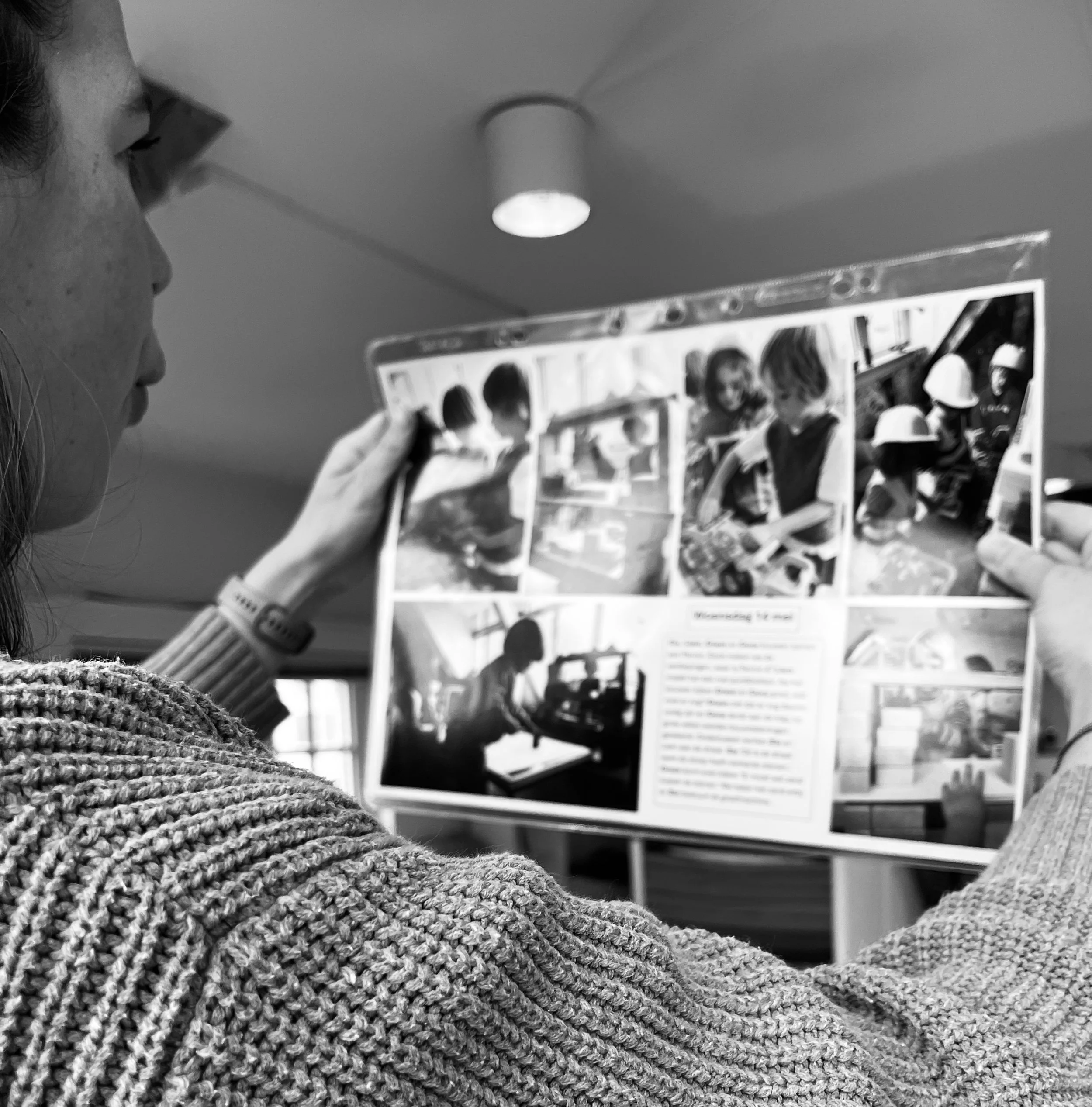
Perhaps the question “Who is it for?” is particularly revealing. It suggests that documentation is understood as something that needs to be created for someone else; perhaps for school leaders, for parents, for accreditation, for evidence that the programme is doing what it promises to do. In other conversations teachers have shared a view of documentation that is designed as a form of marketing, a carefully curated and some-what ‘perfect’ window into the life of a classroom. At other times, it is understood as a way of demonstrating that children are progressing towards predetermined learning goals. Perhaps this sounds familiar?
Whilst none of these purposes is necessarily without value, each of them falls short of the practice-shifting potential that documentation really offers. It is true that families have a right to understand something of their children's experiences at school, that schools need to create thoughtful ways of making learning visible, and educators need systems for keeping track of children's learning and development. Yet, we also wonder what might be lost when these become the primary reasons for our documentation. For us, the important question is not ‘Who is documentation for?’ but: What does documentation make possible?
Rather than seeing documentation as a product or an administrative task, we both understand its role and potential impact to be far greater. To us, documentation is a disposition, a way of approaching our work with curiosity and attentiveness. It asks educators to notice closely, to remain open and to resist arriving at conclusions too quickly. Be it a photograph, a fragment of dialogue, a drawing, a construction, a gesture, or a theory offered during play, these traces reveal something about what educators notice and value. Collecting them is only the beginning, deeper possibilities emerge when teams return to the documented traces with curiosity:
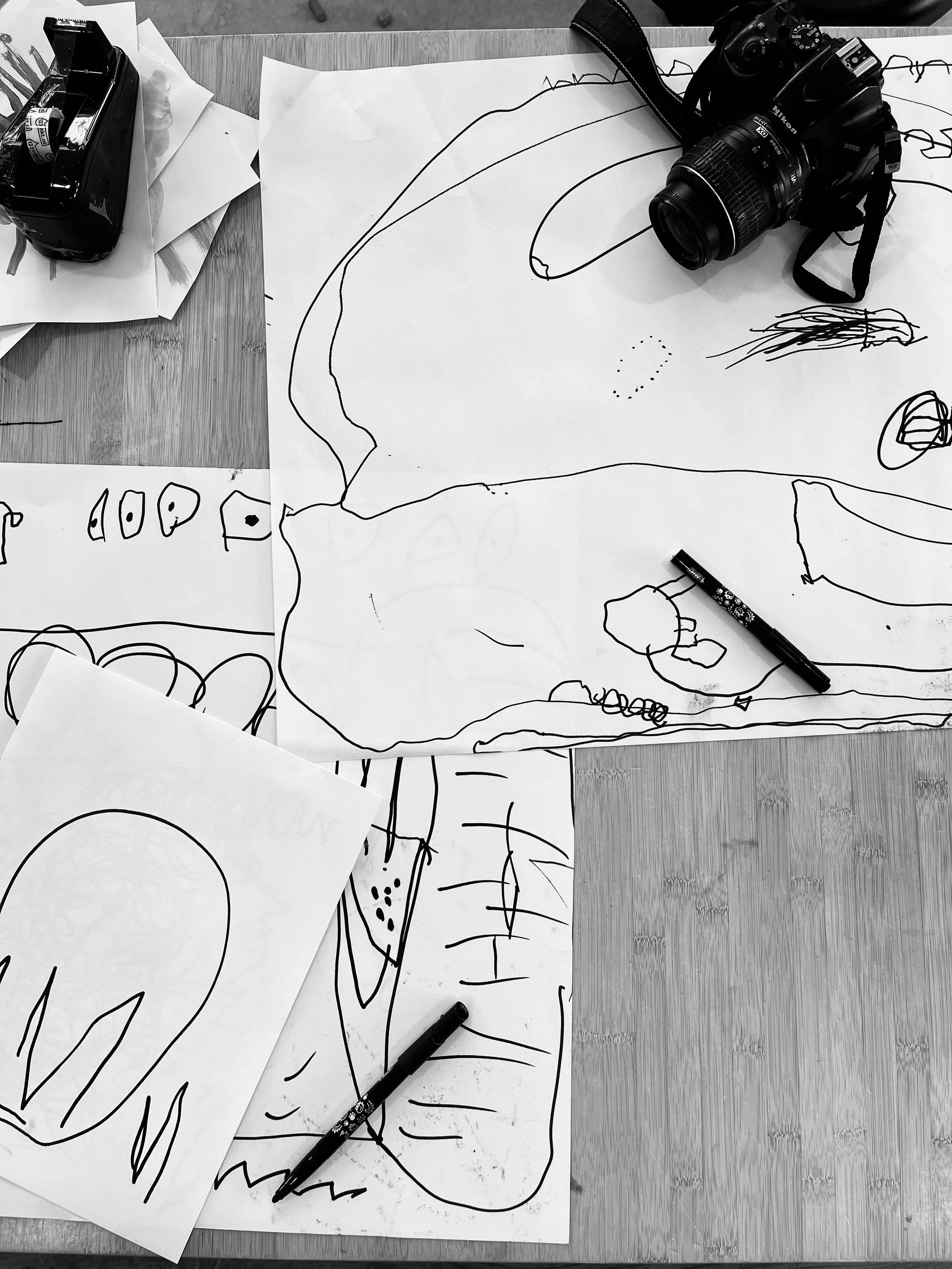
What might be happening here?
What seems to matter to these children?
What ideas are they exploring?
What relationships are forming and how?
What are we noticing now, that we did not notice in the moment?
What assumptions are we bringing to what we see?
Perhaps, then documentation is a way of investigating how learning is unfolding; a process that invites educators to linger with uncertainty and resist the temptation to know too quickly. When educators gather around collected traces of children's learning - a photograph, transcript, drawing, video clip or collection of artefacts - different interpretations inevitably emerge. One person notices a relationship. Another hears a theory. Someone else recognizes an idea that surfaced several weeks earlier. A colleague asks a question that unsettles the interpretation everyone had begun to settle upon.
Careful analysis helps teams consider what might come next. What materials might invite further investigation? What question might deepen the inquiry? What experience could challenge or complicate an emerging theory? What might be worth returning to tomorrow, next week, or even several months from now? In this way, documentation is intimately connected to planning, a thoughtful act of responding to what is emerging.
There is another important shift when documentation is revisited with children. A photograph placed back into the group, a transcript of yesterday's conversation, a drawing rediscovered weeks later, or a video clip watched together can become an invitation for reflection: What do you remember? Do you still think this? What do you notice now?
What could we try next? It is here that children can reflect and encounter their own ideas again. They might disagree with an earlier theory, notice how something has changed, remember something that had almost been forgotten, or build on a friend's idea. When built into regular and systematic habits of practice, this shared contemplation of documentation means that yesterday's experience becomes material for today's thinking and documentation becomes a collective memory for the learning community.
So, who is documentation for? For us, the answer is everyone. Documentation can offer families a rich window into the intellectual and social lives of children. It enables children to revisit their experiences, recognise their thinking and contribute to decisions about where their learning might travel next. It helps teams build shared understandings of learning and make pedagogical decisions about what to offer in response to children’s thinking. It invites the families and learning community into deeper dialogue about what matters in the lives of children.
The etymology of documentation offers an interesting way to reflect on this idea. The word traces back to the Latin docēre, meaning “to teach” or “to generate knowledge”, with the suffix -mentum referring to the instrument, result or act of an action. At its roots, then, documentation is connected not simply with recording what has happened, but with the active processes of teaching, learning and the construction of new knowledge. This definition invites us to think differently about what we are doing when we document. Rather than producing a record of learning that has already occurred, or providing proof that substantiates delivery of the curriculum, documentation can become an instrument for understanding the learning process as it unfolds, helping us to notice, interpret and share the ideas that children are encountering, wondering and grappling with. In this sense, documentation is not merely about learning - it is a strategy for learning.
So, perhaps, documentation is a way of staying close to learning... a way of slowing down, of holding onto an idea so that it can be returned to, questioned, complexified and transformed. It keeps conversations open, curiosity alive and repositions wonder and curiosity at the heart of our practice, as we pause and consider: what might be possible next?